Search keeps changing faster than most marketers expect. New features show up on search pages. AI summaries appear. Voice searches grow. People ask questions in natural language. Because of all this, SEO is no longer just one method. It now includes multiple supporting strategies that work together. These are often called SEO Counterparts.
This guide explains these strategies in simple terms. Each section helps you understand what they do and how they fit into modern SEO. If you work in digital marketing or want to get better visibility online, this will give you a clear starting point.
Introduction
SEO is not the same as it was five years ago. Search engines now use AI, machine learning, and large language models to interpret pages. They want clear information. They want trustworthy pages. They want content that answers questions fast.
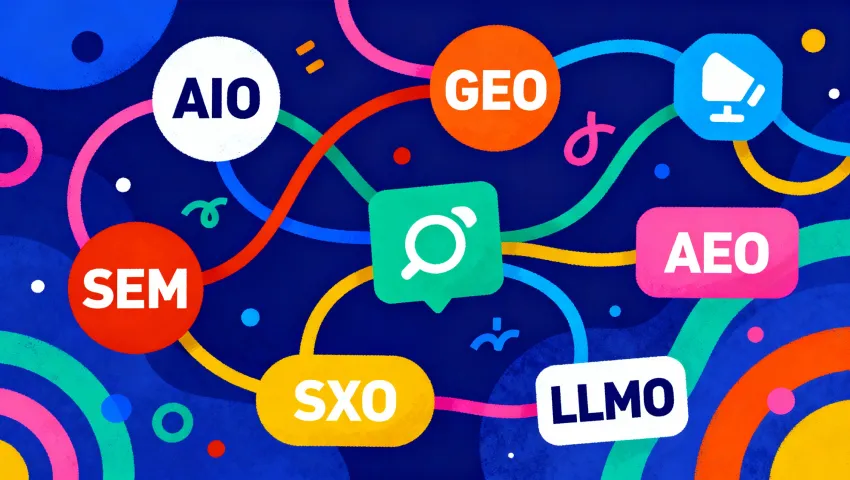
Marketers need more than old-school tactics. They need supporting strategies like AIO, GEO, SEM, AEO, SXO, and LLMO. These methods help your main efforts appear across many surfaces in SERPs. They also help you stay visible in new AI-driven experiences.
Understanding these SEO Counterparts makes your entire strategy stronger.
What Are SEO Counterparts?
SEO Counterparts are connected strategies that support the main SEO process. They don’t replace SEO. They help it grow. Each counterpart focuses on a different part of search. Some help you appear in AI answers. Some improve experience. Some support paid visibility. Some help you get chosen by language models.
These methods extend the reach of your content. They help you adapt to changing search behavior. As search becomes more complex, SEO Counterparts become more important for any brand that wants consistent visibility.
Why Understanding SEO Counterparts Matters
Search results no longer show only organic links. You now see AI Overviews, snippets, videos, images, maps, product listings, ads, and knowledge panels. If you rely on only one type of SEO, you miss huge opportunities.
When you understand these methods, you can cover more ground. You can show up in more places. You can reach users who search through text, voice, and AI tools.
Learning SEO Counterparts keeps you prepared for the changes happening across search.
Core SEO Strategies Explained
Before we discuss advanced strategies, it helps to know the core elements of SEO. These parts still matter. They become stronger when combined with the counterparts.
On-Page SEO
On-page SEO focuses on your content. It includes headings, keywords, links, and structured writing. The goal is to explain things clearly so users and search engines understand your page. Strong on-page structure supports all other SEO Counterparts.
Off-Page SEO
Off-page SEO deals with backlinks and mentions. These signals help search engines measure trust. When more good sites mention your brand, your authority grows. This makes your main SEO strategy stronger.
Technical SEO
Technical SEO helps your site run smoothly. It includes crawling, indexing, speed, mobile design, and security. When your technical base is clean, every other strategy performs better. Technical SEO supports each of your SEO Counterparts.
AIO: AI-Optimized SEO
AIO helps search engines and AI systems understand your content clearly. AI models look for structure, clarity, factual accuracy, and clean writing. They avoid pages that feel vague or confusing.
AIO focuses on simple formatting and direct answers. It includes short sentences, clean headings, lists, and strong explanations. It also focuses on helpfulness and truth. AI systems reward content that feels honest.
When your content follows AIO best practices, you improve your chances of appearing in AI Overviews. This makes AIO one of the most important SEO Counterparts today.
GEO: Generative Engine Optimization
GEO helps your content appear in AI-generated search answers. Generative engines collect data from many pages and create summaries. They pick sources that are clear, structured, and helpful.
GEO focuses on shaping your content for these engines. It includes short paragraphs, bullet points, tables, definitions, and examples. It also requires stable facts and clean formatting.
When your content is easy for generative models to scan, you increase your chance of being selected. GEO gives you visibility even when organic results appear lower on the page. This makes it a powerful part of modern SEO Counterparts.
SEM: Search Engine Marketing
SEM supports your organic strategy with paid visibility. This includes search ads, display ads, and product ads. It helps you appear even when rankings take time to build.
SEM is useful for new sites, competitive markets, and urgent campaigns. Paid results help you reach users while your SEO grows in the background. SEM also helps you test keywords before building full content around them.
Many brands use SEM as one of their key SEO Counterparts because it fills gaps and supports long-term planning.
AEO: Answer Engine Optimization
AEO helps your content appear in direct answers, snippets, and voice results. Search engines want quick responses, so they pick pages that provide clear explanations.
AEO includes question-based headings, FAQ blocks, short answer sections, and structured definitions. It also focuses on natural language because users often search in natural tone.
With AI-driven search growing fast, AEO helps your pages appear in several high-visibility spots. It sits among the most effective SEO Counterparts for knowledge-based content.
SXO: Search Experience Optimization
SXO focuses on improving the user experience. Search engines look at behavior signals like bounce rate, scroll depth, and time on page. When users stay longer, the page feels more helpful.
SXO includes fast loading, simple layouts, readable fonts, and smooth navigation. It also includes clean CTAs and strong mobile design.
Better experience helps both users and search engines. SXO gives you a stronger foundation and supports the rest of your SEO Counterparts.
LLMO: Large Language Model Optimization
LLMO helps your content get understood by language models. These models use semantic reading. They look for clear relationships between ideas. They reward clean writing and strong structure.
LLMO includes concise sentences, high factual accuracy, helpful formatting, and logical flow. It also includes context-rich explanations that help AI systems understand meaning.
As AI models influence search more, LLMO becomes essential. A llm.txt file is made for AI models to understand the nature of your website entirely. It is one of the newest and most important SEO Counterparts.
Comparison Table
Here is a simple table to help you compare each strategy:
| Strategy | Focus Area | Benefit | Best Use |
| AIO | AI readability | Better AI visibility | AI Overviews |
| GEO | Generative search | AI summary inclusion | Generative results |
| SEM | Paid reach | Instant visibility | Competitive keywords |
| AEO | Direct answers | Snippet wins | Question queries |
| SXO | User experience | Better engagement | High intent users |
| LLMO | AI model clarity | Strong AI understanding | Semantic content |
Each method helps your main SEO efforts. When combined, they make a strong set of SEO Counterparts.
How These SEO Counterparts Work Together
These strategies support each other. AIO helps search engines understand your content. GEO helps AI systems lift your page into summaries. AEO helps you win direct answers. SXO helps keep users engaged. LLMO helps language models interpret your writing. SEM helps you stay visible in competitive markets.
When used together, you appear across multiple parts of SERPs. You get more clicks and more trust. You also prepare for changes in search behavior. This is why mixed SEO Counterparts often outperform single-method strategies.
Future of SEO and Its Counterparts
Search will continue to evolve. AI-driven responses will become more common. People will ask questions through natural speech. Users will expect instant answers.
To stay visible, you need content that feels clear and trustworthy. You need structured data and clean formats. You also need authority signals and strong user experience.
SEO will stay important, but it will work alongside several connected strategies. Knowing these SEO Counterparts prepares you for long-term success.
Conclusion
SEO is no longer a single method. It is a system supported by multiple connected strategies. AIO, GEO, SEM, AEO, SXO, and LLMO help your content reach users across different search environments. Each strategy has its role. Each one adds value. When used together, they give you stronger results.
Understanding these SEO Counterparts helps you adapt to how search works today and prepares you for what comes next.