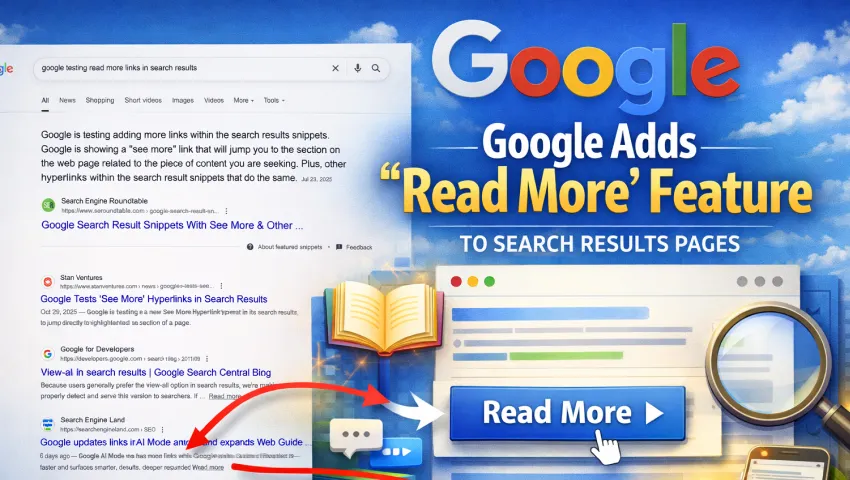
Google keeps changing how search results look and behave. One of the latest changes is the “Read More” feature inside search result snippets. This feature allows users to expand a snippet and read more content without clicking the page.
For users, this feels helpful and convenient. For SEO marketers, this changes how visibility, clicks and performance should be measured. Rankings still matter, but how content appears inside the SERPs matters more than before.
This article explains what the Read More feature is, why Google added it, how it changes user behaviour, and how SEO strategies should adapt.
What is the “Read More” Feature in Google Search?
The Read More feature appears inside organic search snippets. When users see a result, they can click “Read more” to expand the text. This shows additional content directly on the search result page.
Users no longer need to visit the page to understand the topic better. They can preview more information instantly. This is different from featured snippets. It is also different from AI Overviews. The Read More feature expands the organic snippet itself.
This change shifts how users interact with SERPs. It also changes how content competes for attention.
Why Google Introduced the Read More Feature
Google wants users to get answers faster. Many people search to learn, not always to click. The Read More feature supports this behaviour. It gives users more context before they decide what to do next.
This feature also fits with Google’s broader move toward AI-driven search. AI Mode and AI Overviews already provide summaries. Read More adds another layer of information without leaving the SERP.
From Google’s perspective, this improves satisfaction. From an SEO perspective, it changes how success should be evaluated.
How the Read More Feature Appears in SERPs
The Read More link appears below the initial snippet text. When clicked, it expands additional lines from the page. The content usually comes from the opening section or relevant paragraphs.
This expanded view keeps users on the search results page. They may still scroll, compare results, or choose to click later. Some users may not click at all. That does not always mean poor performance.
How Read More Changes User Behaviour in Search?
- User behaviour shifts in subtle ways.
- Users read more before deciding.
- They become more selective.
- They click fewer results, but with stronger intent.
For informational queries, many users may find what they need inside the expanded snippet. For commercial or deeper topics, users may still click to learn more.
This means clicks may decrease for some pages. Engagement quality may increase for others. SEO marketers must understand this shift instead of reacting only to CTR drops.
Impact on Click Through Rate and Engagement
Click through rate can change after the Read More feature appears. Some pages may see lower CTR. This is common for definition or explainer content.
At the same time, users who do click are often more interested. They already read part of the content. This can lead to longer sessions and better conversions.
This shift shows why CTR alone is no longer a complete success metric. Engagement and intent matter more.
Read More vs Traditional Search Snippets
Traditional snippets show limited text. Users had to click to learn more. Read More changes that model. Content is now partially consumed inside the SERP.
This increases the importance of how your content opens. The first few lines matter more than ever. Clear writing and direct answers are now essential.
Table: SERP Snippet Behaviour Before and After Read More
| Aspect | Before Read More | After Read More |
| Snippet Length | Short preview | Expandable text |
| User Action | Click to read | Read inside SERP |
| CTR Pattern | Higher volume | More selective |
| Engagement Quality | Mixed | Often higher |
| Intent Filtering | Low | Stronger |
This table shows why SEO strategies must adapt. Visibility now starts before the click.
Which Queries Are Most Affected by Read More
Some query types feel the impact more clearly. These include:
- Informational queries
- “What is” searches
- “How does” questions
- Health and education topics
- Finance explainers
- Basic definitions
These queries benefit from expanded snippets. Users often get enough information without clicking. This does not mean the page failed. It means the page did its job early.
Impact on Informational and AI-Driven Searches
AI-driven search already provides answers directly. The Read More feature supports this layered experience. Users can compare AI summaries with organic expanded snippets.
This means content must be clear and accurate. If your content is confusing, users will not trust it. If your content is strong, it may influence decisions even without clicks.
Role of AI Mode and AI Overviews in Expanded Snippets
AI Mode encourages conversational searching. Users explore topics step by step. Expanded snippets support this behaviour.
AI Overviews give a summary. Read More gives depth from individual pages. Together, they shape how information is consumed.
For SEO, this means content should answer questions clearly and flow logically. Machines and humans both read it.
SEO and AI Presence After the Read More Update
SEO is no longer only about ranking and clicks. Presence matters. If your content appears clearly in the SERP, users may remember your brand.
Even without a click, visibility can build trust. This is part of modern SEO and AI presence. Content that explains well benefits even when traffic patterns change.
How SEO Marketers Should Interpret Performance Changes
After the Read More feature appears, some metrics may shift. CTR may drop. Impressions may stay stable. Engagement may improve.
This does not mean rankings dropped. It means behaviour changed. SEO marketers should analyse performance using multiple signals. Focus on conversions, assisted actions and long-term trends.
How to Track Read More Impact in Google Search Console
Use Search Console to monitor changes. Compare date ranges before and after the rollout. Watch impressions, CTR and average position together.
Segment queries by intent. Informational queries often show different behaviour than transactional ones.
A simple note using the Annotations Feature can help mark the rollout date for later analysis. This provides context when reviewing trends.
Best SEO Practices for Optimising Content for Read More
Strong content openings matter more now. Follow these practices:
- Answer the main question early
- Use simple and clear language
- Avoid fluff in the first paragraph
- Structure content with headings
- Match content closely with search intent
- Write for humans, not algorithms
If your opening explains the topic well, the expanded snippet works in your favour.
How This Feature Changes SERP Competition
Competition now happens inside the SERP. Users compare expanded snippets before clicking. Content clarity becomes a ranking advantage.
This means two pages with similar rankings can perform very differently. The one that explains better inside the snippet wins attention.
Future of Expandable SERP Features
Google is moving toward interactive SERPs. Read More is one step. AI summaries, expandable answers and conversational search will continue to grow.
SEO marketers must adapt to preview-based search. Content must stand on its own, even before the click.
Conclusion
The Read More feature changes how search works. Users read more inside the SERP. Click behaviour becomes more selective. Content visibility starts before traffic begins.
For SEO marketers, this is not a loss. It is a shift. Focus on clarity, intent and value. Write openings that help users quickly. Track performance with context.
Search is evolving. Content that explains well will continue to win, with or without the click.