
Google has introduced a new branded queries filter in Search Console. This gives SEO marketers a much clearer view of brand-related search performance. At the same time, AI Mode is changing how people search and how they interact with brands in the SERPs. These two developments connect closely because branded searches often reflect trust, awareness and user intent shaped by AI driven answers.
If you understand how branded queries work and how AI Mode influences them, you can analyse performance better and create smarter strategies. This guide explains everything in a simple and practical way.
What Are Branded Queries
Branded queries are searches that include your brand name or variations of it. These queries show strong intent. They also reflect how often people remember or trust your brand. Examples include brand names, product lines, service names or company name combinations. Google now makes it easy to isolate this data with the new branded queries filter in Search Console.
Why Google Added a Branded Queries Filter
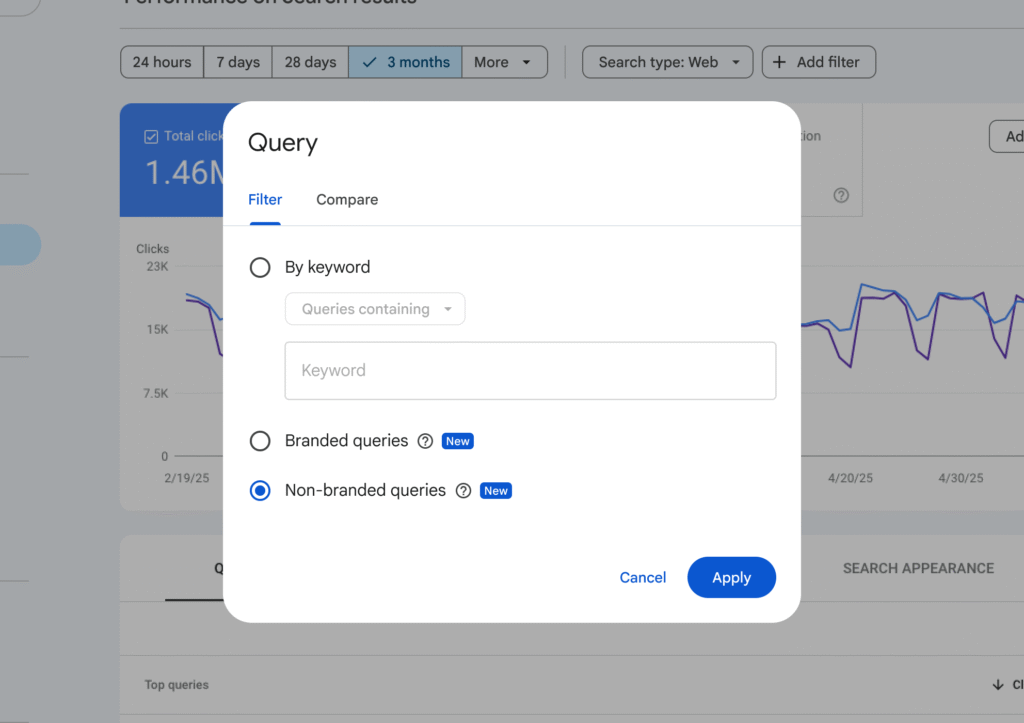
Before the update, marketers had to manually filter branded keywords using long lists or regex. This was time consuming and often inaccurate. Google added the branded queries filter to simplify reporting. It helps you get a clean view of brand growth, brand awareness and performance changes after campaigns.
It also supports the current shift toward better search transparency. With AI Mode influencing how people discover brands, marketers need clearer data to measure what users already know about them.
How the New Filter Works in Search Console
The filter works inside the Performance report. You can filter queries using the “Branded” option. Once applied, all charts and metrics such as clicks, impressions, CTR and position will adjust to show only branded terms.
You can compare branded and non-branded queries side by side. This makes it easier to measure brand strength and understand whether your growth comes from your brand or from general search optimisation.
Why This Update Matters in the Age of AI Mode
AI Mode is changing how users search. Many people now ask natural questions instead of typing direct keywords. Some of these interactions introduce brand names directly inside AI generated answers. If users see your brand often, they may later search for your name directly.
This means branded queries can increase because of AI exposure. A growth in branded searches may signal that users trust your brand after seeing it inside AI Mode results. The new filter helps you track this behaviour with more accuracy.
How AI Mode Influences Branded Search Behaviour
AI Mode can mention brands while summarising complex information. If your content is clear, structured and helpful, AI Mode may pull your brand into the answer. This increases memory and recall. More users may then search for your brand later.
On the other hand, if another brand appears more often in AI Mode, you may lose branded search share. Monitoring branded queries can help you see this shift early. The new filter makes it easier to track these changes and respond quickly.
Differences Between Branded and Non-Branded Queries
Branded queries reflect awareness. People know your name and search for it directly. Non-branded queries focus on topics, categories or problems without mentioning your brand. Both matter for SEO, but they tell different stories.
Branded queries indicate recognition and trust. Non-branded queries indicate discoverability. The branded filter helps you track both clearly.
Table: Branded Queries vs Non-Branded Queries
| Query Type | Meaning | Example | SEO Value |
| Branded | Includes brand name | “HDFC credit card login” | High intent and conversion |
| Non-Branded | Generic search | “best credit cards in India” | High discovery potential |
| Hybrid | Brand plus qualifier | “HDFC lifetime free credit card” | Strong targeted intent |
Understanding this table helps you see why branded performance needs focused analysis. AI Mode may affect both categories differently.
How to Use the Branded Queries Filter for SEO Insights
The new filter lets you study pure brand demand without mixing it with general search trends. You can measure:
- How many users search your name
- Whether brand interest rises after campaigns
- Whether competitors are gaining more branded visibility
- Which branded keywords drive most clicks
- Whether your branded CTR is strong
- How position shifts affect overall brand traffic
This transparency makes reporting easier and more reliable.
Understanding SEO and AI Presence Through Branded Queries
AI Mode shapes brand impressions. When users ask anything in AI Mode, they often get responses that include trusted brands. If your content performs well, AI Mode may feature your brand repeatedly. This increases recognition and can lead to branded search growth.
Tracking branded queries helps you understand whether your brand is benefiting from AI exposure or losing ground to competitors. It also highlights whether your brand messaging aligns with what users ask inside AI Mode.
How This Update Helps You Measure Brand Strength
Branded query volume is one of the clearest indicators of brand strength. If the volume grows steadily, your brand is becoming more well known. If it drops, it may indicate issues such as declining awareness, negative reviews or stronger competitors.
The new Search Console filter helps you isolate this data instantly. This makes it much easier to evaluate brand performance across content marketing, SEO, AI Mode visibility and advertising.
Impact on SERPs and Search Visibility
Branded queries show different SERP layouts than non-branded ones. They often include sitelinks, knowledge panels, logo panels and structured results. These features help users reach brand pages faster.
With the rise of AI Mode, some branded results may also appear inside the AI generated answer. For example, AI Mode may mention your brand when users search for solutions, tools or services. This increases brand exposure in SERPs even before users see organic listings.
How AI Mode May Change Click Patterns for Branded Searches
AI Mode can show brand information without users clicking. This can reduce clicks for simple informational searches. But it can increase interest for deeper branded queries like product comparison or pricing.
If AI Mode displays your brand positively, users may search your name directly later. This behaviour increases branded traffic. If AI Mode displays competitor brands more often, your branded traffic may drop. The new filter helps monitor these shifts in click patterns and search behaviour.
SEO Strategies to Improve Branded Query Performance
Here are practical ways to grow your branded query performance:
- Build strong brand messaging across all content
- Optimise branded landing pages with clear purpose
- Add schema markup to strengthen brand signals
- Keep brand descriptions consistent
- Improve your Google Business Profile
- Publish content that builds trust
- Use internal links to support branded pages
- Encourage positive reviews
- Improve site speed and usability
AI Mode prefers content that is clear, structured and helpful. If your content meets these standards, AI Mode may highlight your brand more often.
Best Practices for Monitoring AI Mode and Branded Query Trends
To monitor performance effectively:
- Track branded query volume weekly or monthly
- Compare branded and non-branded impressions
- Check which branded keywords appear in AI Mode suggestions
- Look for sudden drops which may signal brand issues
- Measure branded CTR changes across seasons
- Compare performance before and after campaigns
- Watch how AI Mode summarises your brand in various queries
This helps you understand your brand’s position in both traditional search results and AI generated responses.
Future of Search Console Data With AI-Driven Search
As search becomes more AI powered, Search Console may provide deeper branded insights. You may soon see more segmentation for how AI Mode interacts with your content. Branded filters may expand to show which queries came from AI influenced behaviour.
Google may also introduce new metrics like brand mentions in AI Mode. Marketers will rely more on blended data that measures both SEO performance and AI visibility. Brands with strong reputation and clear information will lead in this new environment.
Conclusion
Google’s new branded queries filter gives SEO marketers a clearer look at brand performance. At the same time, AI Mode is shaping how users interact with businesses across the SERPs. When you combine these insights, you get a full picture of brand health and visibility.
Use the branded filter to study demand, track brand strength and understand how AI Mode influences user behaviour. As AI driven search becomes the norm, branded queries will become even more important. Strong branding, clear content and helpful information will help you stay visible in both traditional results and AI powered experiences.